Imagine Andalusia still almost untouched, around 1957, with its white streets, silent squares and that sun that seems painted for cinema. It was in that setting that Brigitte Bardot, the iconic French actress who dominated the imagination of European cinema in the 1950s, stepped foot on land that would transform the perception of the Costa del Sol forever.
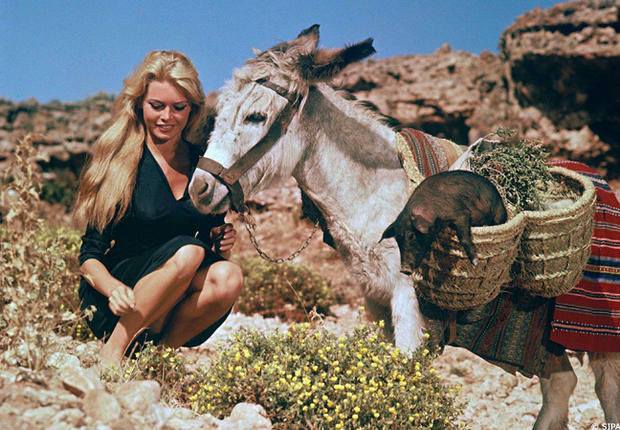
Photo: Diario Sur. Full article at Diario Sur
The film was Les bijoutiers du clair de lune (The Night Heaven Fell). Much of the production was shot in Mijas Pueblo, Torremolinos and other points in the province of Málaga — a decision made by Roger Vadim, the director and Bardot’s husband at the time, who was looking for a natural setting that needed no sets.
What is fascinating is not only Bardot’s presence in front of the camera, but how that shoot became part of the local spirit — a blend of society chronicle and rural legend.
Anecdotes that seem straight out of a film
Those who have gathered the oral memory tell us that Bardot didn’t just film scenes with the village people in the background: she spontaneously interacted with the inhabitants and their customs. Some anecdotes told with a smile today:
- Bardot bullfighting… with a joke thrown in! Some local media recall episodes where people joked about seeing her “torear” in Mijas’s square — or at least face animals in scenes that would be impossible to film the same way today.
- A Mijas donkey turned accidental star, adopted by the actress — or at least the protagonist of several improvised scenes — during filming, according to accounts of the time.
- Bardot was also seen posing in a mantilla, driving convertibles through the Andalusian countryside and joining local festivals, in a vibrant contrast with Francoist Spain of the era.
Beyond the glamour, these small moments reveal something deeper: a spontaneous fusion between the daily life of Mijas and an international star who, however briefly, left an indelible mark.
An icon who came, lived and transformed the landscape
Brigitte Bardot described her stay on the Costa del Sol as similar to a “Spanish Saint-Tropez” — a place full of light, natural charm and authenticity that can still be felt today when you walk the streets of Mijas or look out at the Mediterranean from its viewpoints.
More than a wild cinematic adventure, that shoot coincided with a Costa del Sol that was only just beginning to dream of its tourist future. Images of Bardot chatting with residents, learning to play the Spanish guitar or dancing flamenco with local artists became postcards of a place that was about to stop being a secret.
Mijas: film set and star refuge
Although Bardot was one of the first great international figures to bring spotlights — and curiosity — to Mijas, she was not the only one:
Antonio Banderas was also the owner of a home in Mijas and projected the name of this land from Hollywood to international festivals.
Robert Redford, among other personalities, spent periods in Mijas, drawn by its light, its calm and its way of life.
These stories are not just colourful tales; they are part of the cultural and cinematic identity of Mijas. Walking its squares and alleyways, you breathe that mixture of traditional authenticity and Mediterranean sophistication that enchanted Bardot, and that today captivates visitors and residents alike.
A cinematic legacy that enriches Mijas
Today, sharing this story is not just a tribute to a cinema legend — it is a reminder that Mijas has been, and continues to be, a meeting place between cultures, an inexhaustible source of charm and a natural stage capable of inspiring the world’s great storytellers.
As a Mijas property expert, I invite you to see this village not only as a destination, but as a living story: a place capable of capturing the imagination of a legendary actress like Brigitte Bardot, and of resonating in the stories of those who today seek their next chapter on the Costa del Sol.